Kori Bustard Species Survival Plan
A collaboration between zoos, field scientists, and educators.
Kori Bustard Fact Sheet 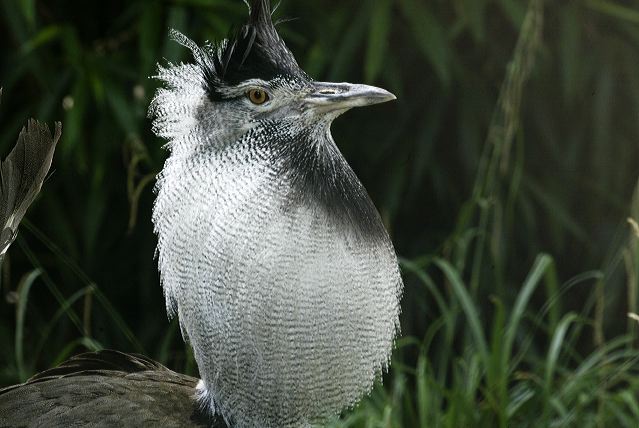
Click here for a poster-style fact sheet
| Scientific Name | Ardeotis kori |
| Family Information | Otidae |
| Close Relatives | Cranes |
| Status | CITES Appendix II |
| Life Span | Unkown in the wild; Captivity - 27 years |
| Size & Weight | 6 - 18 kg (females about half the size of males) |
| Plumage | Upper plumage is buff and grey and barred with black. Underparts may be pale buff, white or solid black |
| Bill (Beak) | Adapted for omnivorous diet |
| Feet | Three front toes which are short, broad, and well-adapted for running |
| Diet | Insects, small mammals, lizards, snakes, seeds and berries |
| Reproduction | Polygynous; Breeding tied closely to amount of rainfall |
| Nest & Eggs | One-two eggs are laid on the ground in a shallow scrape made by the female |
| Parental Nurturing | Only the female participates in raising the chicks |
| Chicks | Precocial; stay with their mother until the start of the next year's breeding season |
| Distribution & Habitat | Grasslands and lightly wooded savannas of southern and eastern Africa |
| Threats | Habitat loss and hunting |
| Predators | Eagles, Leopards, Lions, Caracal and Jackals |
| Interesting Information | One of the world's heaviest flying birds; males gather in lek-like formations and display for females during the breeding season; drink water with a sucking motion rather than scooping it up |